Many people hate a front tooth that chips, stains, or sits uneven. They worry about cost and about picking the wrong fix. Cosmetic dentistry and tooth restoration can help. Front tooth solutions can restore confidence and dental aesthetics.
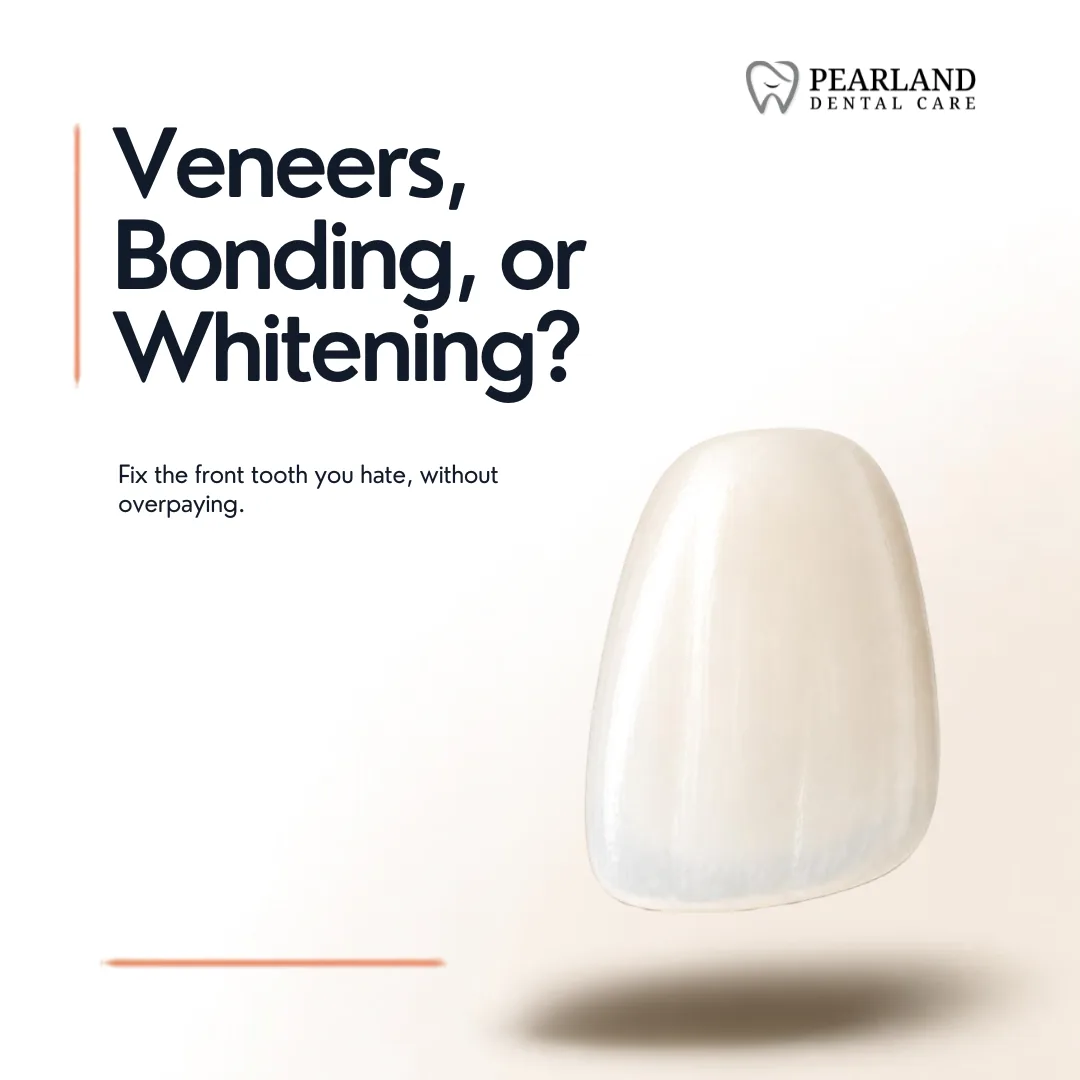
Veneers are custom-made shells that fit over the front surfaces of teeth to hide cracks, chips, and stains. Here you will know about veneers, bonding, and whitening, and it shows pros, cons, costs, durability, and care. You will also find tips to save money and find affordable dentistry without unnecessary procedures.
When considering ways to improve a front tooth, patients often weigh the benefits of veneers, bonding, and whitening. Each option offers unique advantages and challenges that affect aesthetics and budget.
Veneers, bonding, and whitening each offer unique benefits and drawbacks for front tooth repair. Veneers consist of thin porcelain shells that conceal cracks, chips, and stains. They provide long-lasting cosmetic results but permanently alter the tooth structure.
These are often considered cosmetic procedures, so patients typically pay out-of-pocket costs. On the other hand, bonding is a less expensive and reversible solution that works well for minor imperfections like teeth gaps.
Whitening gels target natural enamel but do not affect veneered teeth. Therefore, patients with veneers should look for alternatives to brighten their smiles. Bonding serves as an ideal choice for those wanting a low-cost initial treatment without permanent changes to their teeth's structure.
This consideration greatly impacts individual choices in cosmetic dentistry treatments regarding suitability and financial planning for front tooth solutions.
Dental veneers work well for hiding chips, stains, and shape issues on front teeth. These thin porcelain shells fit over the tooth’s surface, transforming its look completely. They are ideal for people who face multiple cosmetic concerns or have stronger bite forces.
On the other hand, bonding is a versatile solution for smaller repairs like chips and gaps. This non-invasive treatment adheres a composite resin directly onto the tooth without permanent changes.
Tooth whitening effectively addresses discoloration but only works on natural enamel. It does not affect veneered teeth; thus, it might not be suitable if someone has veneers already in place.
Each option serves unique needs in dental aesthetics: veneers offer durability and stain resistance while bonding provides an easy fix at lower costs. Patients should consider their specific situations to choose wisely among these front tooth solutions.
Veneers offer long-lasting results. These thin porcelain shells can resist stains better than bonding. With proper care, veneers can last many years and retain their beauty. Maintenance involves regular dental check-ups and good oral hygiene practices. Patients should avoid hard foods that may chip or crack the veneer.
Bonding provides a short-term solution but lacks the durability of veneers. While it is cheaper and reversible, patients must consider its lifespan when making a choice. Bonded areas can wear out over time and may need touch-ups to maintain aesthetics.
Overall, understanding the differences helps in selecting suitable front tooth solutions for cosmetic needs without overspending on dental aesthetics.
Choosing the right treatment requires a clear understanding of personal needs and goals. Patients should consider their budget while seeking a qualified cosmetic dentist for optimal results.
Personal needs and goals guide the choice between veneers, bonding, and whitening for front tooth solutions. Some patients may have chips or stains on their teeth that need repair.
For those looking to enhance aesthetics without making permanent changes, bonding offers a good start at a lower cost. In contrast, patients who want long-lasting results might prefer dental veneers.
Understanding individual circumstances helps in selecting the right cosmetic dentistry treatment. Veneers permanently alter tooth structure; however, they provide durability and stain resistance over time.
Bonding allows for reversible changes if someone wishes to explore other options later on. A thorough assessment enables individuals to pick a path that aligns with both their budget and desired outcomes in smile enhancement.
Patients can save money on cosmetic dentistry by assessing their specific needs and goals. Choosing bonding over veneers offers a less expensive initial option without permanent tooth alteration. Bonding allows for reversibility, making it easier to change the aesthetic later if desired.
Exploring options like tooth whitening is also cost-effective for minor stains. Since whitening gels only work on natural enamel, patients with veneered teeth should consider other solutions instead of spending unnecessarily on unsuitable treatments.
Finding a trustworthy cosmetic dentist helps ensure appropriate recommendations and avoids unnecessary procedures in dental care or enhancements.
Finding a trustworthy cosmetic dentist is essential for anyone considering veneers, bonding, or whitening. A skilled dentist will have experience in cosmetic dentistry and will understand tooth restoration techniques.
It's crucial to evaluate their qualifications and experience with aesthetic treatments. Checking reviews from previous patients can provide valuable insight into their practice.
Patients should seek dentists who specialize in front tooth solutions like porcelain veneers or structural repair through bonding. Dentists should clearly explain each dental procedure's pros and cons, including costs involved.
Open communication about personal needs will help ensure the right treatment choice without overpaying for unnecessary services. Trustworthy dentists prioritize oral health while enhancing smiles effectively.
You can use veneers, bonding, or tooth whitening. These front tooth solutions come from cosmetic dentistry. They help tooth restoration and improve dental aesthetics.
Porcelain veneers are thin porcelain shells that cover the front of a tooth. Bonding uses a tooth colored resin for quick structural repair. Veneers cost more. Bonding is a less invasive and fast noninvasive treatment.
Tooth whitening can remove many stains on enamel. If staining runs deep, whitening may not help. Then consider veneers or bonding for enamel repair and teeth restoration.
Yes. Bonding can fill chips and close a tooth gap in one visit. Veneers can also reshape teeth for a smile makeover. These dental solutions use simple repair steps and support oral health.
Ask for a clear plan and cost breakdown. Compare porcelain versus composite materials. Ask about longevity, dental procedure steps, and follow up care. That helps you pick the best tooth enhancement and save money.
Tell us a little about what you need — we'll be in touch shortly.
1921 N Main St #115, Pearland, TX 77581, United States

Hi! I'm Tooth fairy! Your AI Assistant Ask me anything