Many people feel stuck when a tooth has big decay or a chip. They ask whether a filling, an inlay, an onlay, or a crown will fix it. Dentists weigh options to save teeth and avoid future trouble.
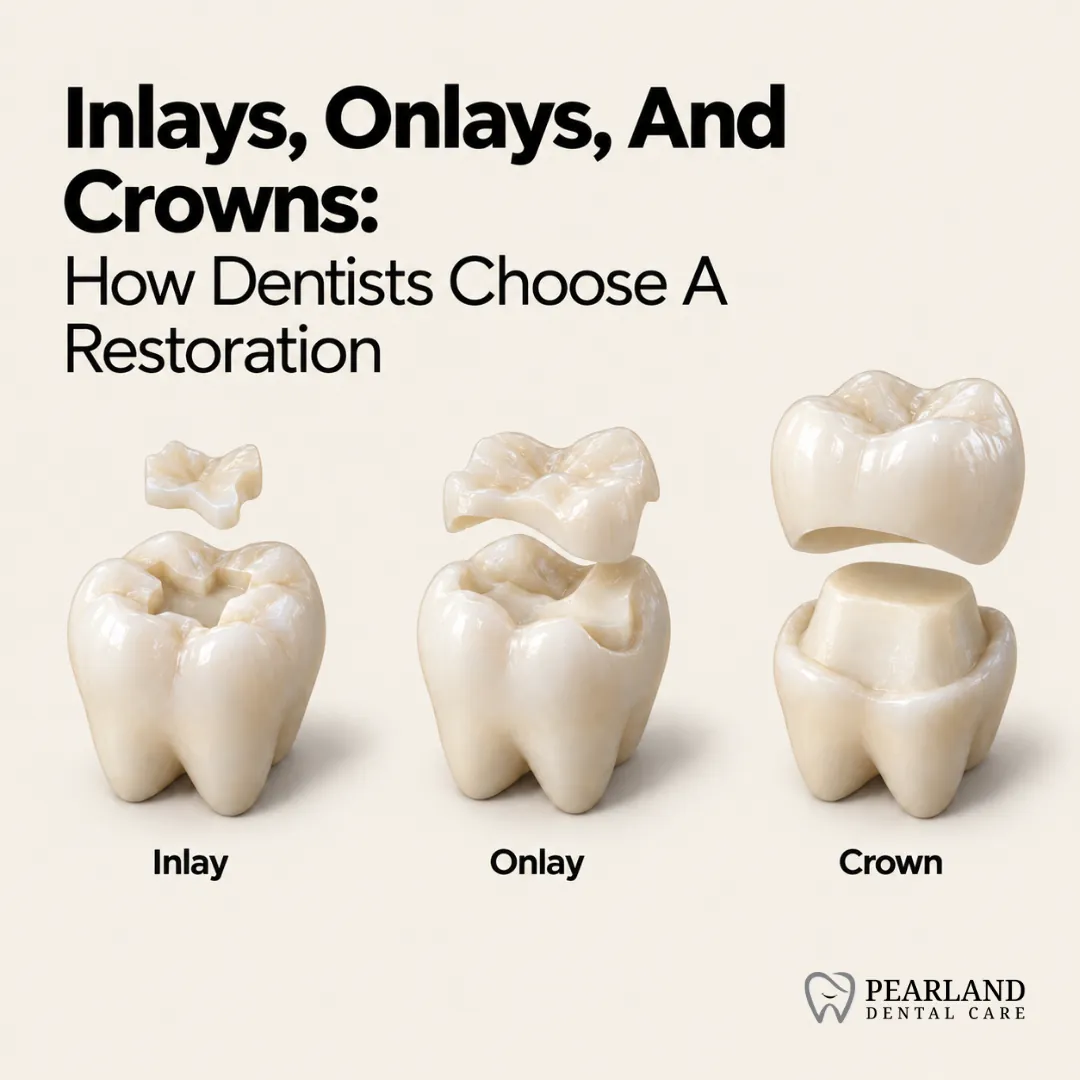
One key fact is that inlays and onlays repair parts of a tooth, while crowns cover the whole tooth. Here you will know how dentists choose by looking at damage, the tooth’s job, and how much healthy tooth remains.
Dentists useinlays, onlays, and crownsto fix teeth with different levels of damage. Each type covers or fills a part of the tooth to help it work better and last longer.
Dentists pick restorations by matching the repair to the tooth's damage and use.
| Restoration | Definition | Key Differences |
|---|---|---|
| Inlay | Fits inside the biting surface. Made in a lab, then bonded in place. Used for small to medium cavities. | Replaces only the center portion of the tooth. Leaves cusps intact. Conserves more natural teeth than a crown. |
| Onlay | Extends over one or more cusps. Fabricated outside the mouth. Repairs larger damage than an inlay. | Covers part of the biting surface and some cusps. Sits between an inlay and a crown in size. Preserves tooth structure better than a full cap. |
| Crown | Caps the entire visible tooth. Made from metal, ceramic, or porcelain fused to metal. Used for large breaks or after root canal therapy. | Requires more tooth removal than inlays or onlays. Offers the highest protection for weak teeth. Lasts longer with proper care, often 10 to 15 years or more. |
Dentists weigh several factors before picking a restoration. They look closely at how much damage the tooth has and where it sits in the mouth. The type of restoration also depends on its job—whether it needs to bear heavy chewing or simply fill a small cavity.
Tooth damage varies in severity. A small cavity might only need a filling, while more extensive tooth decaycould require an inlay or onlay for proper support. If the tooth is severely compromised, a crown might be necessary to restore its function and appearance.
Dentists evaluate how much of the tooth remains healthy. In severe cases, they consider whether enough structure exists to hold a restoration effectively. This assessment helps determine which type of restoration best fits each situation. Choosing the right option can make all the difference for someone’s dental health and overall comfort.
Dentists look closely at the location and function of a tooth when selecting a restoration. Each area of the mouth plays a different role in chewing and speaking. For instance, molars help grind food while incisors cut through it. These functions determine which type of restoration works best.
Front teeth often need restorations that match their shape and color. Dentists might suggest crowns for these visible areas to improve aesthetics. Back teeth, however, face more pressure from chewing forces.
Inlays or onlays can provide strength without removing too much natural structure. Both options cater to how each tooth should perform in the mouth's daily activities.
Dental professionals often recommend inlays, onlays, and crowns based on their strength and durability. Each option plays its part in preserving the tooth's natural structure. Inlays fit snugly within the grooves of a decayed tooth.
Onlays cover one or more cusps while maintaining that natural look. Crowns offer full coverage for severely damaged teeth, ensuring they stay strong and functional. Choosing the right restoration keeps smiles bright and healthy!
Strength and durability
Strength and durability guide many restoration choices.
| Restoration | Strength | Durability | Notes from a Treating Dentist |
|---|---|---|---|
| Inlay | Fits inside the cusp area. Works well for small to medium cavities. | Lasts 10 to 15 years with care. Porcelain and gold last longer than composite. | A treating dentist recalled saving tooth structure. The patient chewed normally after two visits. |
| Onlay | Covers one or more cusps. Adds more support than an inlay. | Often endures 10 to 20 years. Material choice affects lifespan. | A clinician reported restoring a cracked molar with an onlay. The tooth held up under heavy chewing. |
| Crown | Encases the entire visible tooth. Provides maximum support after large damage. | Can last 10 to 25 years. Zirconia and porcelain-fused-to-metal are common choices. | An experienced prosthodontist noted crowns protect weakened teeth. A patient returned to full function within a week. |
| Clinical Factors | Extent of decay drives selection. Structural loss dictates needed coverage. | Occlusion and bite patterns impact wear. Back teeth face higher forces and need tougher restorations. | A local dentist compared two molars in one mouth. One received an onlay, the other a crown, based on the remaining tooth. |
| Material Impact | Gold resists fracture and avoids wear on opposing teeth. Porcelain matches tooth color but may chip. | Zirconia resists fracture and lasts long under pressure. Composite repairs may need replacement sooner. | A dental lab technician reported fewer remakes with zirconia after 2015. Patients praised the natural look of porcelain in front teeth. |
| Patient Behavior | Bruxism shortens restoration life. Night guards reduce damage risk. | Oral hygiene affects longevity. Regular cleanings add years to any restoration. | A general dentist observed a smoker needing replacements more often. Improved habits led to longer lasting work for several patients. |
Preserving natural tooth structure matters in restorative dentistry. Inlays and onlays cover the damaged area without removing too much healthy tooth material. This practice keeps more of the tooth intact, which benefits long-term dental health.
Crowns fit over a tooth completely but may require more shaping than inlays or onlays. Dentists often choose these options to ensure they keep as much original structure as possible while providing strength and durability. Patients appreciate that their teeth feel more natural after receiving these types of restorations.
Inlays, onlays, and crowns are dental restorations used to repair damaged teeth. An inlay fits inside the tooth, while an onlay covers a larger area. Crowns cover the entire tooth.
Dentists consider several factors when choosing a restoration. They look at how much damage is done to the tooth; they also think about your overall oral health and personal preferences.
Yes! Inlays are great for small repairs; they blend well with natural teeth. Onlays provide more coverage for bigger issues without removing too much tooth structure. Crowns offer complete protection for severely damaged teeth.
Most patients feel little discomfort during the procedure thanks to anesthesia. Afterward, some sensitivity is normal but it usually fades quickly as you heal from treatment.
Tell us a little about what you need — we'll be in touch shortly.
1921 N Main St #115, Pearland, TX 77581, United States

Hi! I'm Tooth fairy! Your AI Assistant Ask me anything