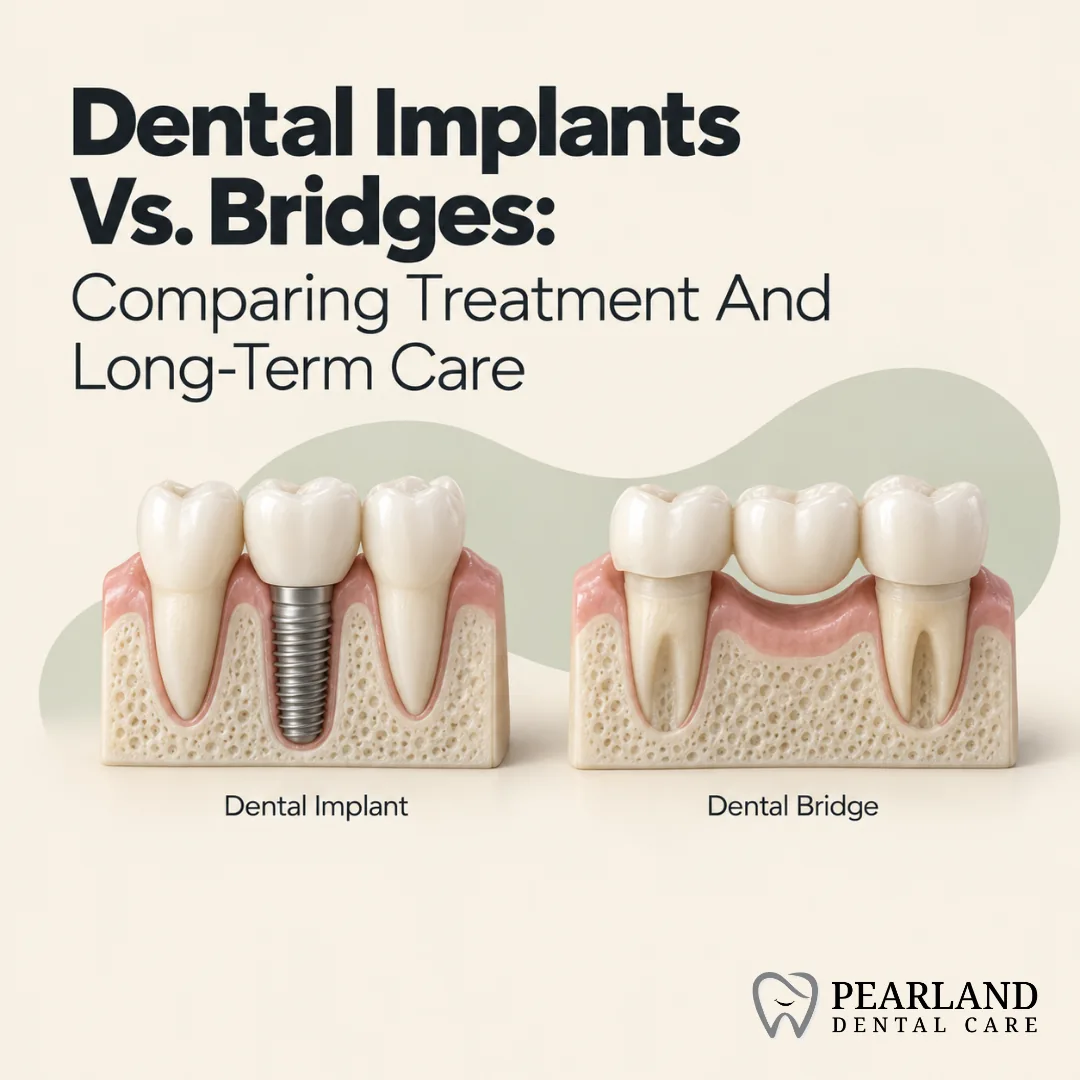
Many people lose a tooth and then face a tough choice. They worry about looks, chewing, and bills. They hear words like implants and bridges and feel lost. A neighbor might say, "Get an implant," while a coworker swears by a bridge. One fact helps cut through the noise, implants bond to bone, bridges use nearby teeth for support.
Key Differences Between Dental Implants and Bridges
Dental implants anchor directly into the jawbone, while bridges rely on nearby teeth for support. Both options fill gaps and restore smiles but use different methods to get the job done.
| Topic | Implants | Bridges |
|---|---|---|
| What it is | Single titanium post placed into jaw. A crown tops the post. | A fixed prosthetic spans a gap. Crowns attach to neighboring teeth. |
| How it works | Bone grows around the post. This creates a stable anchor. | Neighbors bear the load. They support the false tooth. |
| Effect on adjacent teeth | Nearby teeth stay untouched. No drilling is required on them. | Support teeth get reduced. Enamel is shaped for crowns. |
| Bone preservation | Implants keep bone volume. They stimulate the jaw with chewing. | Bridges do not replace root function. Bone loss can follow over years. |
| Procedure timeline | Surgery followed by months of healing. The final crown arrives later. | Usually finished within weeks. Fewer surgical steps are needed. |
| Materials used | Titanium or zirconia posts. Ceramic crowns are often used on top. | Ceramic or porcelain fused to metal. A cast framework supports crowns. |
| Longevity | Implants often last decades with care. Many exceed 20 years. | Bridges last 5 to 15 years commonly. Replacement may follow sooner. |
| Maintenance | Daily flossing and cleaning around the post. Regular dental checkups help. | Rigorous flossing beneath the pontic is needed. Professional cleanings matter. |
| Cost range | Higher upfront cost. Long term value can be strong. | Lower initial cost. May need more work later. |
Dental implants and bridges offer different treatment paths for tooth replacement. Understanding the process can help anyone choose the right option.
These steps highlight how varied treatments are in terms of procedures involved with each method of tooth replacement—dental implants or bridges lead into long-term care and maintenance that follows these initial processes.
Long-term care for dental implants and bridges plays a crucial role in maintaining oral health. Regular check-ups are essential. Dentists recommend visits every six months to monitor gum health and the condition of prosthetics.
Both options require daily attention too. Brushing, flossing, and using mouthwash keep bacteria away. With bridges, food can get trapped under them, so careful cleaning is vital.
Patients with implants must be vigilant about bone support around the implant site. Over time, this area may change if neglected. Keeping an eye on overall hygiene remains key for both treatments; good habits lead to longevity in function and appearance.
A personal experience shared by a patient highlighted that they invested extra effort into their cleaning routine after getting implants—and it paid off! They maintained healthy gums without issues during follow-up visits for years afterward; their smiles never looked better!
Dental implants are artificial tooth roots placed in the jawbone. They support replacement teeth, providing a strong foundation for crowns or bridges.
Bridges fill gaps left by missing teeth. They use adjacent teeth as anchors to hold a false tooth in place, restoring function and appearance.
Dental implants typically last longer than bridges. With proper care, they can last many years; some even last a lifetime while bridges may need replacement after about 10-15 years.
Both options require good oral hygiene like brushing and flossing daily. Implants might need special attention to the surrounding gums while bridges need regular check-ups to ensure stability and health.
Tell us a little about what you need — we'll be in touch shortly.
1921 N Main St #115, Pearland, TX 77581, United States

Hi! I'm Tooth fairy! Your AI Assistant Ask me anything