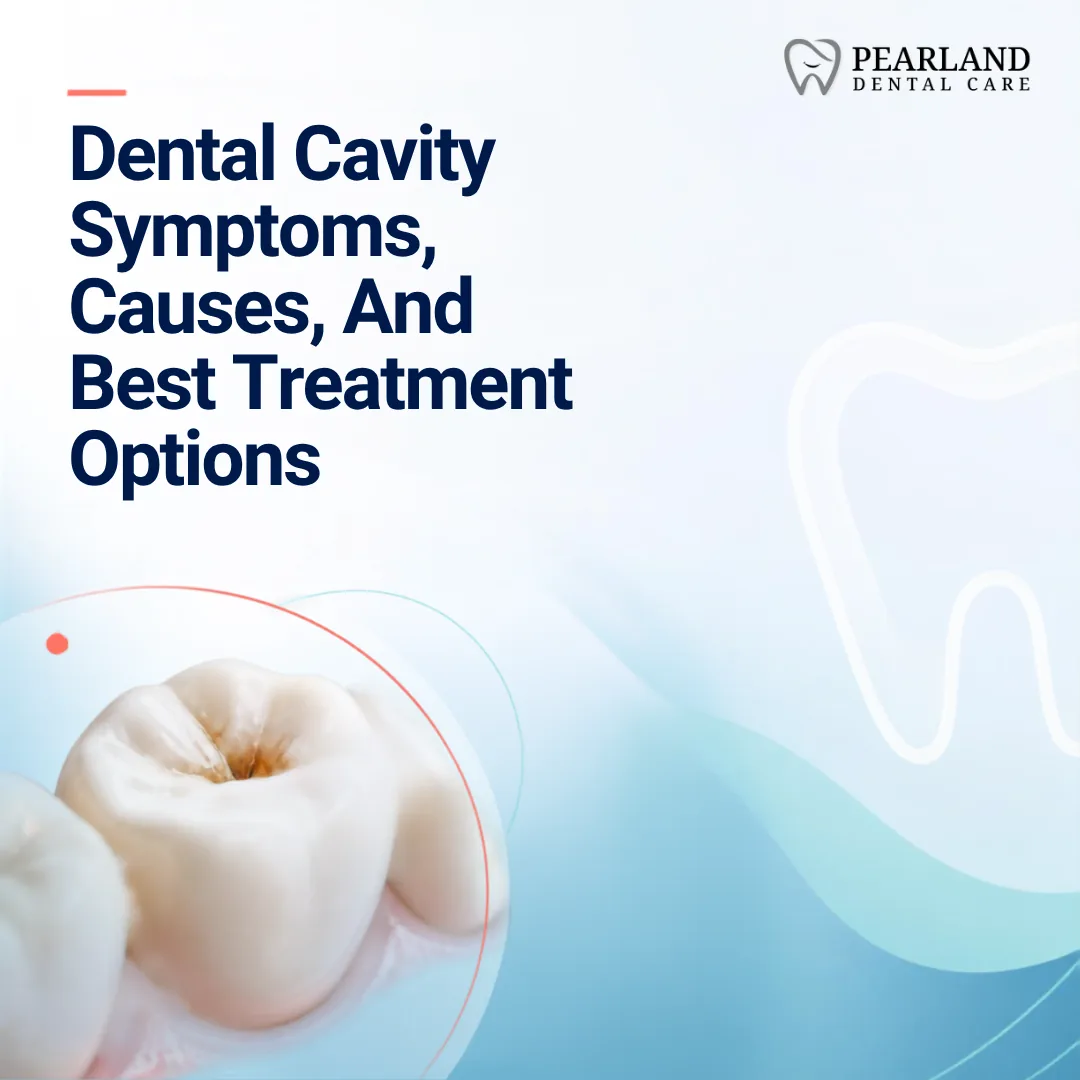
Many people feel sharp pain or tooth sensitivity when they eat or drink. They may worry that a dental cavity causes the problem. They want clear answers and quick steps to fix it. This guide explains symptoms, causes, and treatments in plain words.
One fact is that mouth bacteria eat sugar and make acid that breaks down enamel. This damage leads to holes that need a dentist to fix. Here you will know how to spot signs early, what tests dentists use, and which treatments work best.
Dental cavities are small holes that form in teeth. Mouth bacteria eat sugar and produce acid that damages enamel and causes tooth decay. Plaque builds up on teeth and drives the cavity process. Frequent snacking, sipping sugary drinks, and poor oral hygiene cause cavities. The protective enamel gets weakened and destroyed over time.
Cavities cause pain and sensitivity that worsen as they approach the nerve in the tooth. They represent permanent damage that needs professional repair, such as dental fillings or other treatments. Dentists commonly use dental fillings and root canal therapy to repair serious damage. Oral hygiene, fluoride exposure, and regular dental checkups help prevent cavities and related health problems.
Common symptoms of dental cavities include noticeable changes in tooth appearance and sensitivity to temperature or sweet foods. People often experience pain, discomfort, or even swelling around the affected area.
Dark spots or brown stains often show on the biting or side surfaces of teeth. A dentist who has treated hundreds of patients reports seeing these dark spots as an early dental cavity symptom. Mouth bacteria eat sugar and make acid that destroys enamel and leaves discoloration. Plaque buildup makes the problem worse and speeds enamel erosion.
Patients report tooth sensitivity near the stained area to hot and cold foods. The dentist notes that such discoloration signals permanent damage that usually needs dental fillings or other treatment. Dentists use X-rays and visual exams to confirm cavities under dark spots. Prompt care helps avoid root canal therapy or tooth extraction later.
Sensitivity to hot, cold, or sweet foods often signals tooth decay. Oral bacteria eat sugar and make acid that attacks enamel. Plaque builds on teeth and helps that acid form. Frequent snacking and sipping sugary drinks raise the risk. Poor oral hygiene speeds plaque growth and cavity formation.
Pain and sensitivity tend to get worse as the cavity grows closer to the tooth nerve. Cavities cause permanent damage that needs professional repair like dental fillings or root canal therapy. Untreated holes can lead to infection and serious dental and overall health issues. Early care and good oral hygiene help stop further enamel erosion and tooth pain.
Pain and discomfort often signal the presence of dental cavities. As cavities grow larger, they can cause increased sensitivity, especially when eating hot, cold, or sweet foods. Individuals may experience sharp toothaches that disrupt daily activities. These symptoms occur because the cavity approaches the nerve center within the tooth.
Bacteria feed on sugars from food and drinks, producing acid that weakens enamel over time. This leads to permanent damage if not treated quickly. Pain may escalate as the decay spreads deeper into the tooth structure; untreated cavities can result in serious infections or loss of teeth altogether. Seeking professional help is crucial to avoid these complications and relieve pain through effective treatments like fillings or root canal therapy.
Holes or craters form in teeth as a result of tooth decay. Bacteria in the mouth consume sugar and produce acid that damages the protective enamel. Over time, this damage deepens, creating cavities.
These small holes can lead to significant pain and sensitivity, especially when they approach the nerve at the center of the tooth. If left untreated, these cavities can result in infections and severe dental issues.
Treating cavities requires professional intervention through options like dental fillings or root canal therapy. Maintaining oral hygiene is crucial for preventing such damage to teeth and ensuring dental health. Understanding how bacteria contribute to cavity formation helps individuals make healthier choices for their smiles.
The presence of holes or craters on teeth often leads to bad breath or an unpleasant taste. Cavities create a breeding ground for harmful bacteria in the mouth. These bacteria produce acids that contribute to tooth decay and plaque buildup.
As cavities worsen, they can create infections that lead to foul-smelling breath. Individuals with cavities may notice a metallic or sour taste in their mouths due to decaying food particles trapped within them.
This condition signals underlying oral health issues. Poor oral hygiene habits significantly worsen cavity formation and enhance related symptoms like bad breath. Addressing these problems through proper dental care is essential for maintaining overall health and preventing further complications related to tooth decay and infection.
Swelling or bleeding gums often indicate gum disease. Dental cavities can worsen this condition as oral bacteria create holes in the teeth. Plaque buildup contributes to these issues, causing inflammation and discomfort. Infected gums may bleed during brushing or flossing, signaling poor oral hygiene practices. If left untreated, gum problems can lead to serious dental health complications.
Dental professionals recommend early intervention for swollen or bleeding gums. Timely treatment prevents further damage and restores overall oral health. Understanding the link between gum issues and cavities emphasizes the need for good dental care habits. Subsequently, identifying the causes of dental cavities will provide more insight into prevention strategies.
Swelling or bleeding gums can signal deeper issues within oral health. Early stages of dental cavities often show no visible signs. Bacteria quietly damage teeth without causing immediate discomfort. This silent development allows plaque to accumulate unnoticed, which contributes significantly to cavity formation. As enamel weakens over time, it leaves the tooth vulnerable to decay.
Without symptoms, many people may remain unaware that they have cavities until they reach a more advanced stage. Pain and sensitivity gradually increase as the decay progresses and approaches the nerve center in the tooth. Regular dental checkups become essential for catching these hidden problems before they worsen into more serious issues requiring fillings or root canal therapy.
Bacteria in the mouth cause dental cavities. Sugary and starchy foods feed these harmful bacteria, leading to tooth decay.
Mouth bacteria play a crucial role in tooth decay. These tiny organisms feed on sugar and produce acid as a byproduct. This acid can damage the protective enamel of teeth, leading to cavities. Plaque buildup occurs when these bacteria stick to teeth over time. Poor oral hygiene habits contribute significantly to this buildup.
Cavities result from the permanent damage caused by oral bacteria. Holes formed by this process can lead to infection and pain if untreated. Regular brushing and flossing help reduce harmful bacterial growth, protecting both dental health and overall well-being. Frequent snacking or sipping sugary drinks increases exposure to these cavity-causing microbes, making good dental care essential for prevention.
Sugary and starchy diets significantly contribute to the formation of cavities. Bacteria in the mouth thrive on sugar, producing acid that damages tooth structure. Frequent snacking and sipping sugary drinks increase the chance of plaque buildup on teeth. This plaque leads to tooth decay over time. Poor oral hygiene further worsens this problem, causing more damage. The protective enamel weakens as it is exposed to these acids.
Cavities begin as small holes created by this process, leading to pain and sensitivity as they grow larger. If left untreated, they can cause serious dental issues, including infection and general health problems. Maintaining a balanced diet low in sugars and refined starches helps safeguard teeth from decay. Caring for oral hygiene plays a key role in preventing cavities caused by these harmful substances.
Inadequate oral hygiene habits result in serious dental issues. Skipping brushing and flossing permits plaque to accumulate on teeth. This accumulation plays a significant role in cavity formation and tooth decay. Bacteria in the mouth utilize sugars from food, generating acid that harms tooth structure.
As cavities develop, they create painful sensations and sensitivity. Overlooking proper dental care can lead to permanent damage if left unaddressed. Cavities can result in infections, raising the risk of additional pain and complications. Upholding good oral hygiene is essential for preventing these problems and maintaining overall oral health.
Poor oral hygiene habits significantly contribute to tooth decay. Lack of fluoride exposure also plays a crucial role in cavity development. Fluoride helps strengthen tooth enamel, making it more resistant to acid attacks from harmful bacteria. Without adequate fluoride, teeth become vulnerable and susceptible to cavities.
In communities without fluoridated water or limited access to fluoride toothpaste, the risk of cavities increases. Studies show that children who don’t receive enough fluoride face higher rates of dental decay. Proper fluoride use can help reverse early signs of enamel erosion before they develop into full-blown cavities. Regular dental treatments may also involve professional fluoride applications for added protection against tooth decay and plaque buildup.
Lack of fluoride exposure can worsen dental issues. Reduced saliva production leads to dry mouth, which significantly influences oral health. Saliva plays a crucial role in protecting teeth from cavities by neutralizing acids and washing away food particles. Without enough saliva, bacteria thrive and create more plaque on teeth.
Dry mouth results from several factors, including certain medications, medical conditions, or dehydration. Insufficient saliva allows bacteria to produce acid that damages tooth enamel over time.
This damage contributes to the formation of cavities. If treated properly, people can manage their dry mouth; solutions include drinking water regularly or using saliva substitutes. Promptly addressing dry mouth helps prevent serious dental problems like tooth decay and infections.
Dental professionals diagnose cavities through visual dental examinations. They may also use X-rays to find hidden decay and specialized tools to check the surfaces of teeth for any damage.
Dentists perform a visual dental examination to assess teeth and gums for signs of cavities. They look for visible discoloration or dark spots that indicate decay. This process helps identify any holes or craters on the teeth. During this exam, they also check for sensitivity, swelling, or bleeding in the gums.
Dental professionals often use specialized tools to get a closer look at tooth surfaces. These examinations play a crucial role in early detection of cavities before they cause severe pain or infection. Regular checkups allow dentists to monitor oral health effectively and recommend treatments as needed, such as fillings or fluoride treatment for early-stage cavities.
A visual dental examination helps identify visible signs of cavities. X-rays provide a deeper look, revealing hidden cavities that may not be apparent during the exam. These images can show decay beneath the enamel and between teeth.
Oral bacteria create holes in teeth over time, leading to serious pain if untreated. Detecting these issues early is critical for effective treatment options like fillings or root canals. Regular dental checkups with X-rays ensure that potential problems get addressed before they worsen.
Dentists use specialized dental tools to thoroughly examine tooth surfaces. These tools help identify cavities and any damage early on. An explorer tool, for instance, allows dentists to catch rough areas or tiny holes that may indicate decay. The use of these instruments is crucial since cavities can inflict pain and sensitivity as they grow larger.
X-rays also play a vital role in diagnosing hidden cavities. They reveal problems beneath the enamel that might not be visible during visual exams. Both methods work together to ensure effective detection of decay caused by bacteria and plaque buildup. Prompt identification prevents further tooth damage and serious health issues down the line, making professional dental care essential for maintaining good oral hygiene.
Dental cavities require prompt treatment to prevent further damage. Patients can choose from several effective options, including fluoride treatments for early issues and dental fillings for more advanced decay.
Fluoride treatment helps strengthen enamel and can reverse early-stage cavities. This process prevents further decay and protects against harmful bacteria. Dentists often apply fluoride varnish directly to the teeth or recommend fluoride toothpaste for at-home use. Fluoride works by allowing minerals to penetrate the tooth structure, which combats tooth decay effectively.
Regular exposure to fluoride is vital for maintaining good oral health. It significantly reduces the risk of cavity formation caused by plaque buildup and poor oral hygiene practices. Early intervention with fluoride treatments can stop cavities from worsening, helping individuals avoid more invasive procedures like fillings later on.
Dental fillings repair small to medium cavities effectively. Dentists use these fillings to close the holes in teeth formed by decay. Cavities result from bacteria consuming sugar and producing harmful acid. This acid damages tooth structure, leading to painful sensitivity and discomfort as the cavity grows larger.
Many people experience relief after getting a filling. The dentist cleans the decayed area before applying the material that fills the cavity. Options like composite resin or amalgam ensure a strong bond with the tooth while restoring its shape and function. This treatment permanently addresses damage from cavities, preventing further issues and maintaining oral health.
Crowns provide a strong solution for teeth with extensive damage. They fully cover the tooth, restoring its shape and function. Dentists often recommend crowns when decay becomes severe or after root canal therapy. The treatment protects remaining tooth structure from further harm.
This option helps prevent pain and infection linked to untreated cavities. Crowns also maintain appearance by matching the natural color of surrounding teeth. For anyone dealing with significant dental issues, crowns can offer a reliable way to enjoy good oral health again without losing the affected tooth.
Crowns address extensive damage, but root canal therapy handles severe cases. This procedure becomes necessary when cavities deepen and reach the tooth’s nerve. Dentists typically recommend it to save a heavily decayed or infected tooth.
During a root canal, dentists remove the infected pulp inside the tooth. They then clean out the area and seal it to prevent further infection. Patients often report relief from pain following this treatment.
Without intervention, untreated cavities can lead to serious issues like infections and ongoing pain. Root canals are common treatments for such advanced decay; many people experience significant recovery afterward through proper dental care practices.
Tooth extraction becomes necessary for teeth that are irreparably damaged. Severe decay or infection can cause permanent harm to a tooth, leading to extreme pain and possible complications.
Oral bacteria create holes in the teeth that may reach the nerve at the center, causing significant discomfort. If dentists cannot repair such damage with fillings or root canal therapy, they recommend extraction as a solution.
A tooth extraction removes the affected tooth completely, preventing further issues like infections from spreading to neighboring teeth. After removal, patients need professional dental care options like implants or bridges to restore function and appearance. Ignoring severely damaged teeth can lead to serious dental health problems down the line.
Preventing dental cavities requires consistent care and attention. Daily brushing with fluoride toothpaste and regular flossing make a significant difference in oral health.
Brushing twice daily with fluoride toothpaste prevents cavities and promotes oral health. This simple habit helps remove plaque, which forms from bacteria that feed on sugars. Plaque buildup contributes significantly to cavity development and tooth decay. Fluoride strengthens tooth enamel, making it more resistant to acid attacks from these bacteria.
Many people experience sensitivity as cavities grow larger. By brushing regularly, they can reduce the risk of pain associated with cavities. Dentists often recommend this practice for effective dental care; it is an easy way to combat potential issues before they escalate. Regular use of fluoride toothpaste can also contribute to healthier gums and improved oral hygiene.
Daily flossing helps eliminate plaque between teeth. Plaque forms from bacteria in the mouth, leading to cavity development. Bacteria consume sugar and create acid that damages tooth structure. This damage continues as plaque builds up over time.
Flossing removes food particles and prevents plaque buildup. It promotes better oral hygiene by getting into areas a toothbrush cannot reach. Regular flossing reduces the chances of cavities and tooth decay. To maintain healthy teeth, individuals must make daily flossing a habit.
Limiting sugary and acidic foods and drinks plays a crucial role in preventing cavities. Bacteria in the mouth consume sugar, producing acid that weakens tooth enamel. This process contributes to cavity formation over time. Frequent snacking on sweets or sipping soft drinks also enhances this risk, creating an environment where plaque thrives.
Many individuals notice how reducing these foods improves their oral health. Fewer cavities lead to less pain and sensitivity as well as better dental experiences. Regular monitoring of dietary habits can help maintain strong teeth; this approach aids in avoiding permanent damage caused by decay. Additionally, understanding how dental cavities are diagnosed provides further insight into maintaining oral hygiene effectively.
Regular dental checkups and cleanings play a vital role in preventing cavities. Dentists can spot early signs of tooth decay before they become serious problems. They use special tools to examine teeth closely and look for any areas affected by plaque or bacteria. A professional cleaning removes harmful buildup that toothbrushes often miss.
Patients often feel relieved after their cleanings, noticing fresher breath and cleaner teeth. These visits also give dentists the chance to provide personalized advice on maintaining good oral hygiene at home. By following these recommendations, individuals can better protect their enamel from erosion and eliminate factors contributing to cavities.
Dental sealants offer extra protection against cavities. They create a smooth, protective layer over the grooves of teeth, especially molars. This barrier helps prevent plaque buildup and keeps harmful bacteria away from enamel. In turn, this reduces the risk of tooth decay significantly.
Applying dental sealants is quick and painless. Dental professionals usually apply them to children's teeth as soon as their molars emerge. However, adults can also benefit from sealants if they have deep grooves in their teeth or a history of cavities.
Protecting enamel with sealants supports good oral health practices, alongside regular brushing and flossing.
Common symptoms of dental cavities include toothache, sensitivity to hot or cold foods, visible holes in teeth, and pain when biting down.
Dental cavities occur due to plaque buildup on teeth. Bacteria in plaque produce acid that eats away at tooth enamel. Poor oral hygiene and sugary diets increase cavity risk.
Treatment options for dental cavities include fillings, crowns, and root canals depending on severity. Regular check-ups help catch problems early.
To prevent dental cavities, practice good oral hygiene by brushing twice daily and flossing regularly. Limit sugary snacks and drinks; visit your dentist for routine cleanings.
Tell us a little about what you need — we'll be in touch shortly.
1921 N Main St #115, Pearland, TX 77581, United States

Hi! I'm Tooth fairy! Your AI Assistant Ask me anything