Missing teeth can change a smile and make chewing hard. Often people fear they cannot get an implant because their jawbone is thin or has shrunk.
Bone grafting adds bone where the jaw is weak. It helps dental implants stay stable and fuse with bone. Here you will understand when grafting becomes necessary, the common graft types, and what to expect before and after surgery.
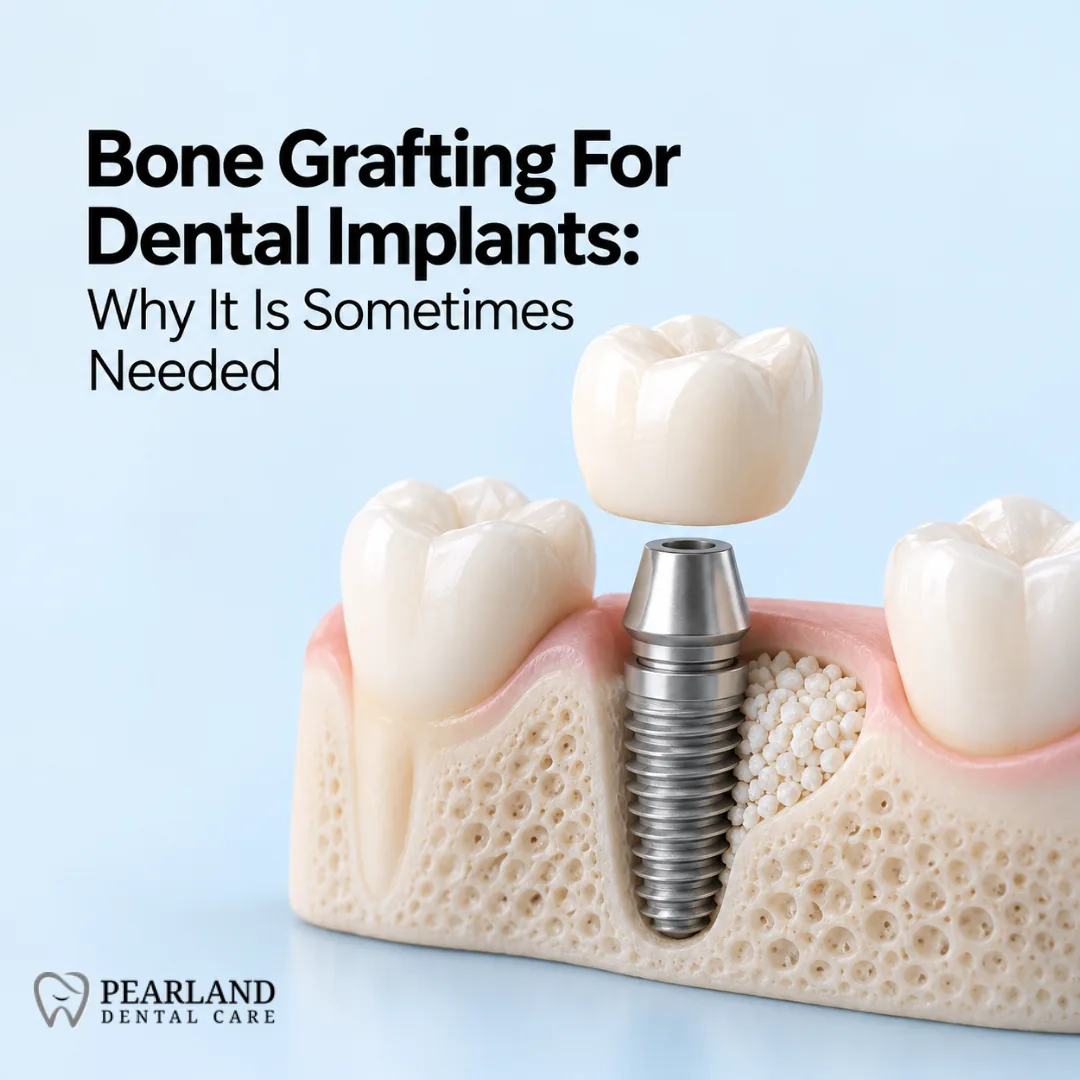
Bone grafting for dental implants builds up the jawbone so implants can sit solidly. Surgeons place bone or bone-like material into the alveolar ridge to add volume and density. A periodontist once said, "I often use grafts after tooth loss to help osseointegration," and that hands-on work helped him place implants with higher stability.
Patients hear about graft materials like autograft, allograft, and xenograft, and they like hearing which option came from a trusted clinician.
Clinicians call the procedure bone augmentation or bone regeneration. Some grafts fuse quickly and support implant placement in months. A dental surgeon recalled treating a 56-year-old who lost bone after periodontal disease, then gained enough alveolar bone for a crown.
A dentist may suggest bone grafting if the jawbone does not have enough strength to hold an implant. Sometimes, past injuries or gum disease make adding new bone necessary for successful implant placement.
Insufficient bone density or volume can pose a real challenge for dental implants. After losing a tooth, the jawbone often begins to shrink. This loss happens because the body reabsorbs bone tissue when it isn’t being used.
Dental professionals see this shrinkage as a significant hurdle during implant placement. If there isn't enough healthy bone to support an implant, osseointegration may fail, which means that the implant won't bond effectively with the jawbone.
People who suffer from periodontal disease or trauma are particularly vulnerable to low bone density. Research shows that many patients need some form of grafting procedure before they can receive their implants.
Bone grafting for dental implants boosts oral health and stability by adding necessary material where it’s lacking.
Bone loss due to trauma or periodontal disease can complicate dental surgery. A person who faces an accident might experience jawbone damage, leading to a significant reduction in bone density.
Similarly, untreated periodontal disease can erode the alveolar ridge, which holds the teeth in place. This erosion poses challenges for implant placement.
A patient had a car accident that left her with limited bone support for dental implants. Her dentist emphasized the need for bone grafting to restore lost volume and density before any implantation could occur.
Without this procedure, achieving implant stability would be nearly impossible. Same goes for individuals dealing with gum issues; they may require bone augmentation as part of their oral rehabilitation plan.
A quick list lays out common graft choices and what to expect.
| Procedure | Source | When Used | Pros | Cons & Healing |
|---|---|---|---|---|
| Autograft | Patient's own boneOften from chin or hip | High need for new boneWhen fastest integration is wanted | Highest success for integrationNo rejection risk | Two surgical sites raise discomfortHeals in 3 to 6 months on average |
| Allograft | Donor human bone, processedSourced from tissue banks | Moderate bone lossWhen patient prefers single surgery | Avoids donor site painReadily available | Small rejection or infection riskRegenerates over 4 to 6 months |
| Xenograft | Animal bone, usually bovineHeavily treated and sterile | Socket preservation after extractionWhen volume maintenance matters | Good scaffold for new boneLong lasting volume support | Slower replacement by patient's boneMay take 6 to 9 months for full integration |
| Alloplast | Synthetic materials, like calcium phosphateNo human or animal tissue | Small defectsWhen patients want no biological donor | Predictable compositionLow infection risk | Integration depends on bone growthHealing often 4 to 6 months |
| Sinus Lift | Graft placed under sinus membraneUses autograft, allograft, or xenograft | Upper molars with low sinus floorWhen vertical height is insufficient | Creates vertical bone for implantsProven long term results | Sinus complications can occur rarelyWait 4 to 9 months before implant placement |
| Ridge Augmentation | Builds width or height of alveolar ridgeCombines graft and barrier membrane | Collapsed ridge after tooth lossWhen implant site needs contouring | Restores proper implant platformImproves cosmetic outcome | May take 3 to 9 months to stabilizeSometimes needs minor contouring later |
Bone grafting for dental implants is a procedure that adds bone to your jaw. It helps create a strong foundation for the implant when there isn't enough natural bone.
Sometimes, people lose teeth and the jawbone shrinks over time. Bone grafting rebuilds this lost structure, making it possible to place an implant securely.
Recovery can vary from person to person, but most people feel better in a few weeks. Full healing may take several months before you can get your dental implant.
Most patients report some discomfort, but it's usually manageable with pain relief options provided by their dentist or oral surgeon.
Tell us a little about what you need — we'll be in touch shortly.
1921 N Main St #115, Pearland, TX 77581, United States

Hi! I'm Tooth fairy! Your AI Assistant Ask me anything