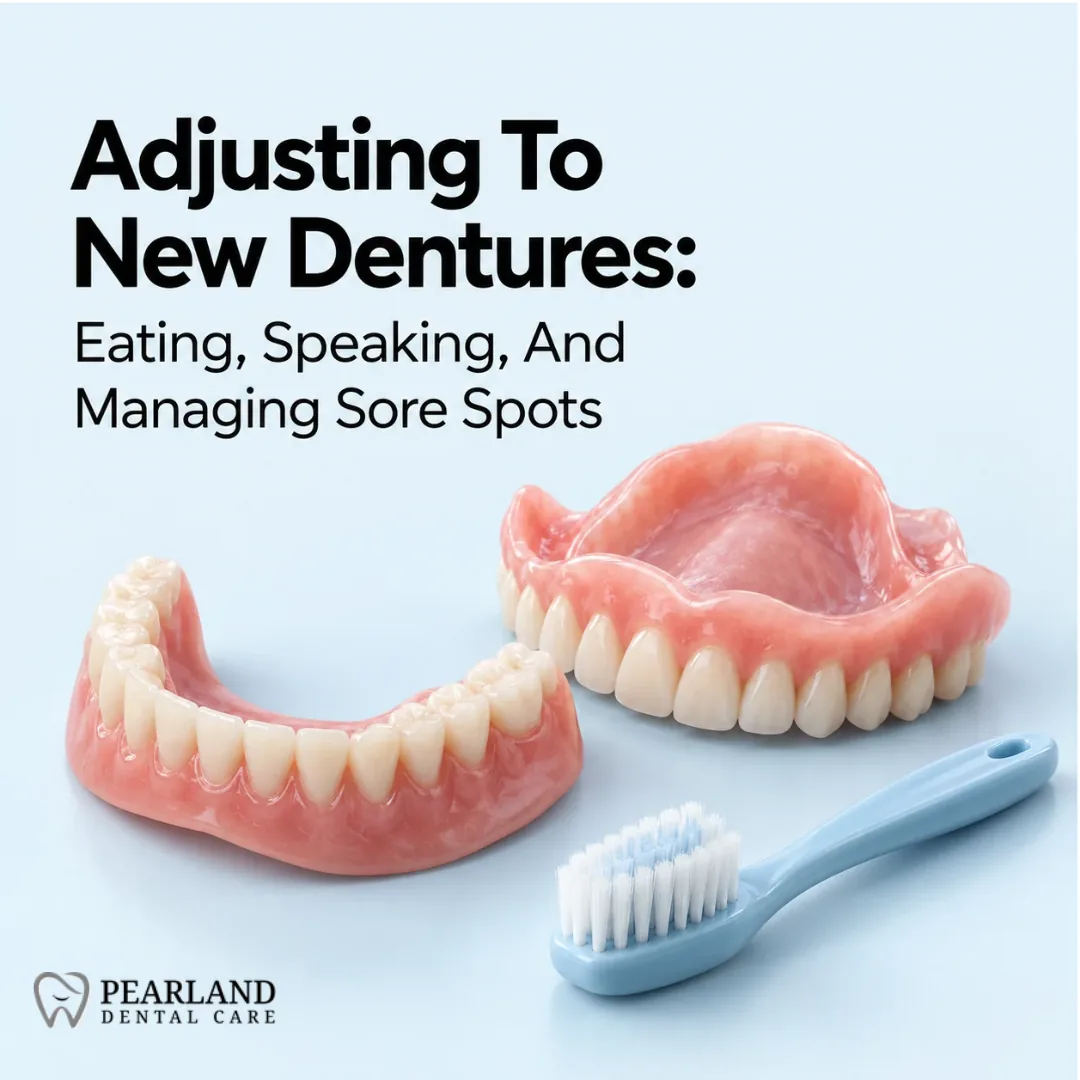
Many people feel awkward with new dentures. Food can slip, words can sound odd, and gums can sting. This often makes eating and talking stressful. Most wearers adapt in a few weeks, and small changes speed that up. Here you will find tips on what to eat, how to speak, and how to stop sore spots.
Adjusting to new dentures can make eating feel a bit strange at first. Try little changes and you’ll soon enjoy your favorite meals again, even if things taste or feel different now.
New denture wearers need patience. Eating will feel odd at first.
Eating with new dentures takes some practice. One key skill involves chewing food slowly and using both sides of the mouth.
People often feel nervous about speaking with dentures. They can practice by reading aloud, boosting their confidence one word at a time.
Speaking with new dentures can feel strange at first. Many people find that practice helps them adjust quickly.
Incorporating these tips can ease the adjustment period for speech with dentures, paving the way to managing sore spots effectively next.
Difficult sounds can trip up anyone with new dentures. Many struggle with letters like “s” and “th.” They may find these sounds come out garbled or unclear. Practice helps, though.
Reading aloud can build confidence. It also gives a chance to focus on tricky pronunciations without pressure. A few minutes each day can work wonders.
Another helpful trick is to exaggerate the movements of the mouth while practicing speech. This technique might feel silly at first, but it makes a real difference in clarity. Adjusting to speaking takes time; patience is key during this adjustment phase.
Once someone masters their new speech patterns, they’ll likely feel more comfortable moving on to other aspects of denture use, like managing sore spots effectively.
Managing sore spots with dentures can feel like a challenge. A simple saltwater rinse often brings relief to those tender areas in the mouth.
Sore spots can make wearing dentures uncomfortable. A saltwater rinse offers relief and helps with healing.
The transition to new dentures can be tricky, but practicing speech with them is essential too.
Getting new dentures can be a challenge. Adjustments help fix any discomfort or fit issues. A dentist usually handles these changes. They check the denture’s alignment and make necessary tweaks.
Patients often feel nervous about these visits, but they shouldn't worry. Dentists are experienced in this process. These adjustments can greatly improve comfort and overall satisfaction with the denture fit.
Sore spots may disappear after just one visit, transforming how a person eats or speaks with their dentures in place. Regular dental appointments play an essential role in maintaining good oral hygiene and ensuring proper denture care while minimizing gum sensitivity over time.
Adjusting to new dentures can take a few weeks. Everyone is different, but most people find that they feel more comfortable after about two weeks of regular use.
Eating will be different at first, but you can get back to normal foods gradually. Start with soft foods and chew slowly; this helps your mouth adapt without causing discomfort.
If you notice sore spots, try adjusting the fit of your dentures or using dental adhesive for better stability. If pain continues, visit your dentist for adjustments; they can help make things right.
Speaking may feel strange initially as well; practice makes perfect here too! Read aloud or talk to friends until you gain confidence in your speech again while wearing them.
Tell us a little about what you need — we'll be in touch shortly.
1921 N Main St #115, Pearland, TX 77581, United States

Hi! I'm Tooth fairy! Your AI Assistant Ask me anything